What Is an HRM System? Does a Small Business Really Need One?
What Is an HRM System?
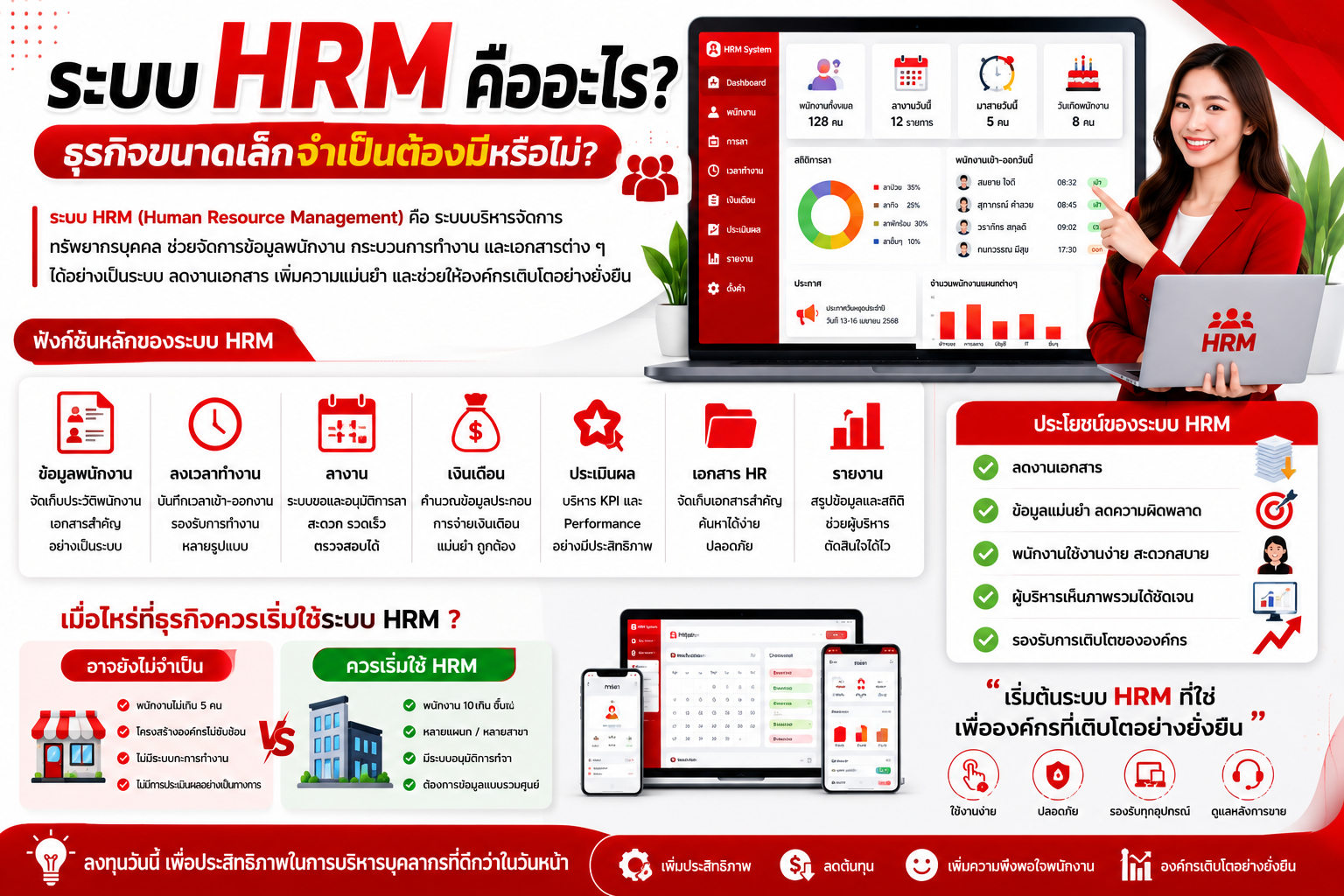
A Human Resource Management (HRM) System is software designed to manage employee information, attendance, leave requests, payroll data, performance evaluations, and HR-related workflows.
As businesses grow, managing employee records through spreadsheets becomes increasingly difficult. An HRM system helps centralize information and automate HR processes.
Common Features of an HRM System
| Feature | Description |
|---|---|
| Employee Database | Store employee records |
| Attendance Tracking | Manage clock-in and clock-out data |
| Leave Management | Leave request and approval workflow |
| Payroll Support | Salary and payroll calculations |
| Performance Reviews | KPI and performance tracking |
| HR Documents | Document management |
| Reporting | HR analytics and reports |
Does a Small Business Need an HRM System?
The answer depends on company size and complexity.
You May Not Need One Yet If:
Fewer than 5 employees
Simple organizational structure
No shift scheduling
Minimal HR processes
You Should Consider One If:
More than 10 employees
Multiple departments
Multiple branches
Leave approval workflows
Growing HR administration workload
Benefits of HRM Systems
Reduced paperwork
Better data accuracy
Faster HR processes
Improved employee experience
Better management reporting
Scalability for future growth
HRM Software vs Custom HRM System
| Category | Ready-Made HRM | Custom HRM |
|---|---|---|
| Initial Cost | Lower | Higher |
| Setup Time | Faster | Longer |
| Flexibility | Limited | Highly Flexible |
| Workflow Customization | Limited | Full Control |
| Integration Options | Limited | Extensive |
Conclusion
HRM systems are no longer only for large enterprises. Small and growing businesses can benefit significantly from improved efficiency, automation, and better workforce management.
If your company is struggling with spreadsheets, manual approvals, or growing HR workloads, implementing an HRM system may be the next step toward sustainable growth.