Company Website vs Facebook: Does Your Business Need Both?
Should Businesses Use Both a Website and Facebook?
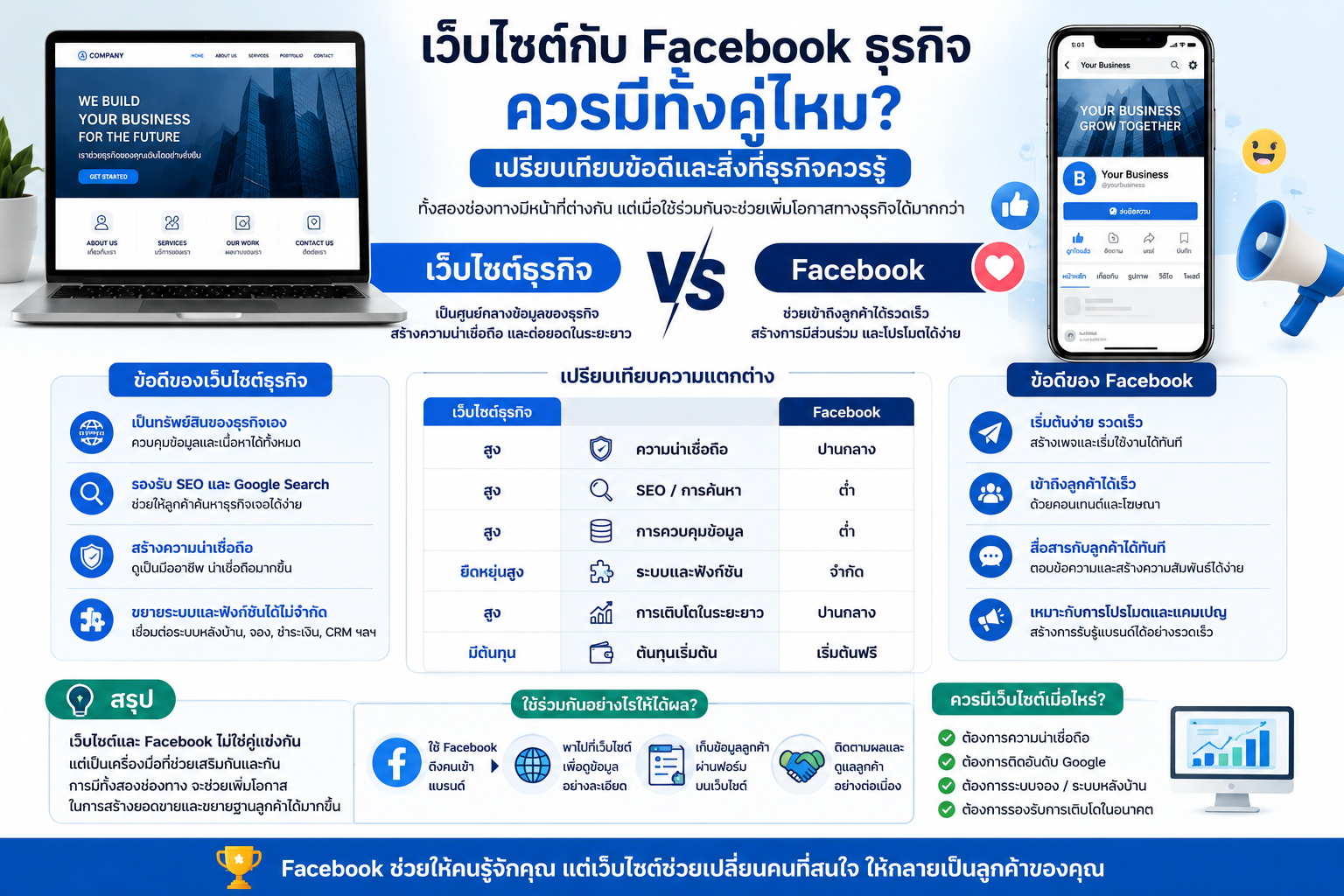
Many businesses, especially startups and SMEs, often ask whether they should invest in a website or rely solely on Facebook. The reality is that both platforms serve different purposes and work best together.
Facebook helps businesses reach audiences quickly and build engagement, while a company website creates credibility and serves as a long-term digital asset.
What Is Facebook Best For?
Facebook works well for:
Promotions and campaigns
Business updates
Community building
Paid advertising
Customer engagement
Benefits of Facebook
Easy to start
Lower upfront costs
Fast audience reach
Direct customer interaction
Limitations of Facebook
Platform dependency
Algorithm changes affect visibility
Limited control over data
Harder to organize information
What Is a Business Website Best For?
A business website acts as a central hub for company information and supports long-term growth.
Ideal for:
Company information
Service presentation
Lead generation
SEO optimization
System integrations
Benefits of a Business Website
Full ownership
Better SEO performance
Higher credibility
Scalable for future growth
Limitations of Websites
Initial investment required
Requires maintenance
Longer setup time
Website vs Facebook Comparison
| Category | Business Website | |
|---|---|---|
| Credibility | Medium | High |
| SEO | Low | High |
| Data Control | Low | High |
| Custom Features | Limited | Flexible |
| Scalability | Medium | High |
Should Businesses Use Both?
Yes. Both platforms serve different roles.
Recommended approach:
Facebook → Drive traffic and engagement
Website → Convert visitors into customers
Examples:
Send Facebook Ads traffic to landing pages
Share website articles on Facebook
Collect leads through forms
Showcase portfolios on websites
Conclusion
Facebook and websites should not compete with each other. They complement one another. Facebook increases reach, while websites build trust and support long-term business growth.
Businesses that combine both platforms effectively often create stronger digital strategies and better conversion opportunities.