Website vs Web Application: What’s the Difference?
What Is a Web Application?
Many businesses planning digital projects often ask: What is the difference between a Website and a Web Application?
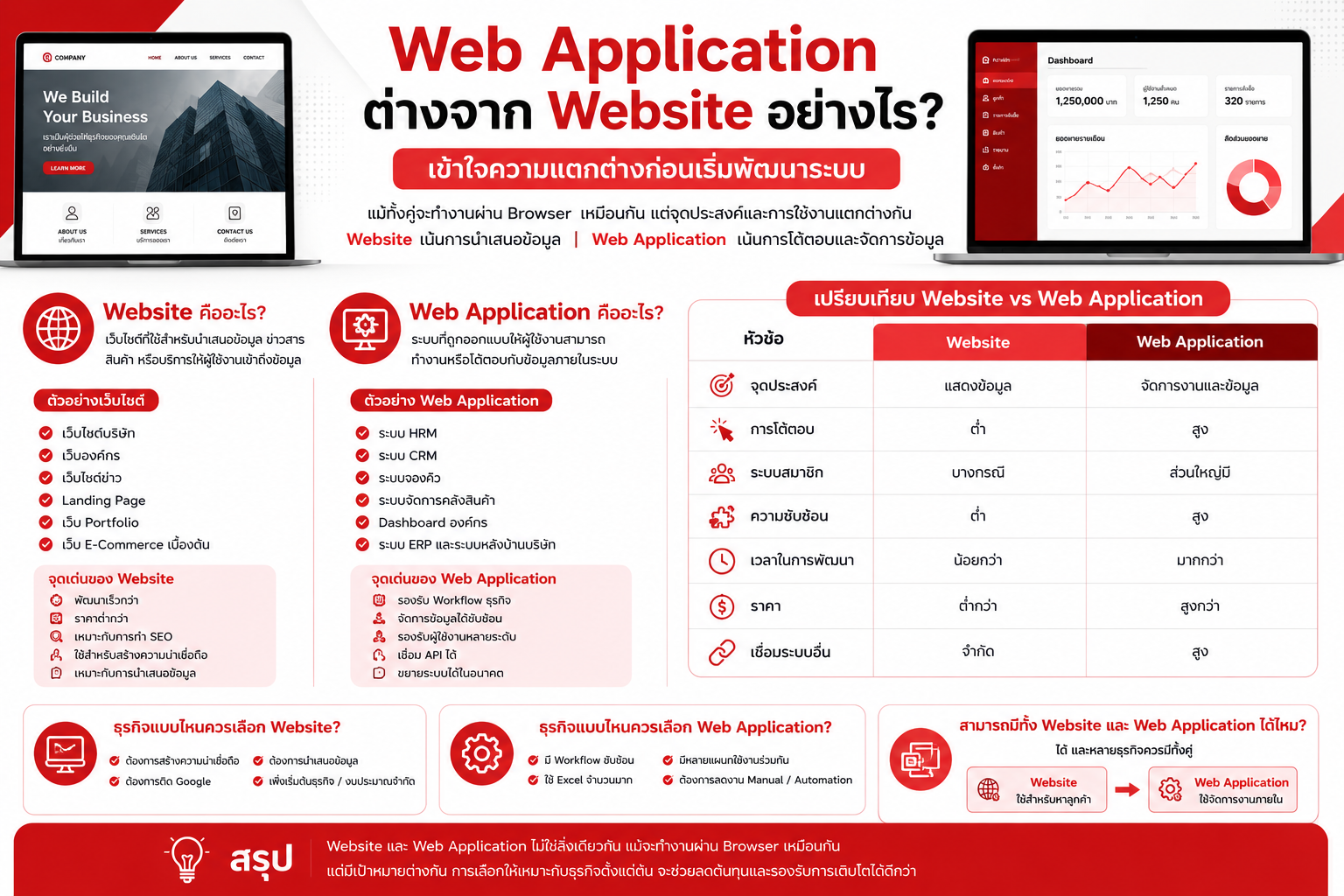
Although both run inside a browser, they serve different purposes. Websites mainly provide information, while web applications are designed for interaction, workflows, and business operations.
What Is a Website?
A website is primarily built to display information and content.
Examples:
Company websites
Corporate websites
Landing pages
News websites
Portfolio websites
Basic e-commerce websites
Advantages of Websites
Faster development
Lower cost
Better SEO opportunities
Strong credibility building
Information-focused
What Is a Web Application?
A web application allows users to interact with data and perform actions inside a system.
Examples:
HR systems
CRM systems
Booking systems
Inventory management systems
ERP systems
Internal dashboards
Advantages of Web Applications
Supports business workflows
Handles complex data
Multi-user permissions
API integrations
Scalable architecture
Website vs Web Application Comparison
| Category | Website | Web Application |
|---|---|---|
| Purpose | Information | Operations & Workflows |
| User Interaction | Low | High |
| Complexity | Lower | Higher |
| Development Time | Shorter | Longer |
| Cost | Lower | Higher |
| Integrations | Limited | Extensive |
Which One Should Your Business Choose?
Choose a Website if you need:
Online presence
Better SEO
Brand credibility
Marketing support
Choose a Web Application if you need:
Workflow automation
Business processes
User management
Data handling
Conclusion
Websites and web applications may look similar, but they solve different business problems. Choosing the right solution from the beginning can save costs, improve efficiency, and support future growth.
Businesses often benefit most when both systems work together.