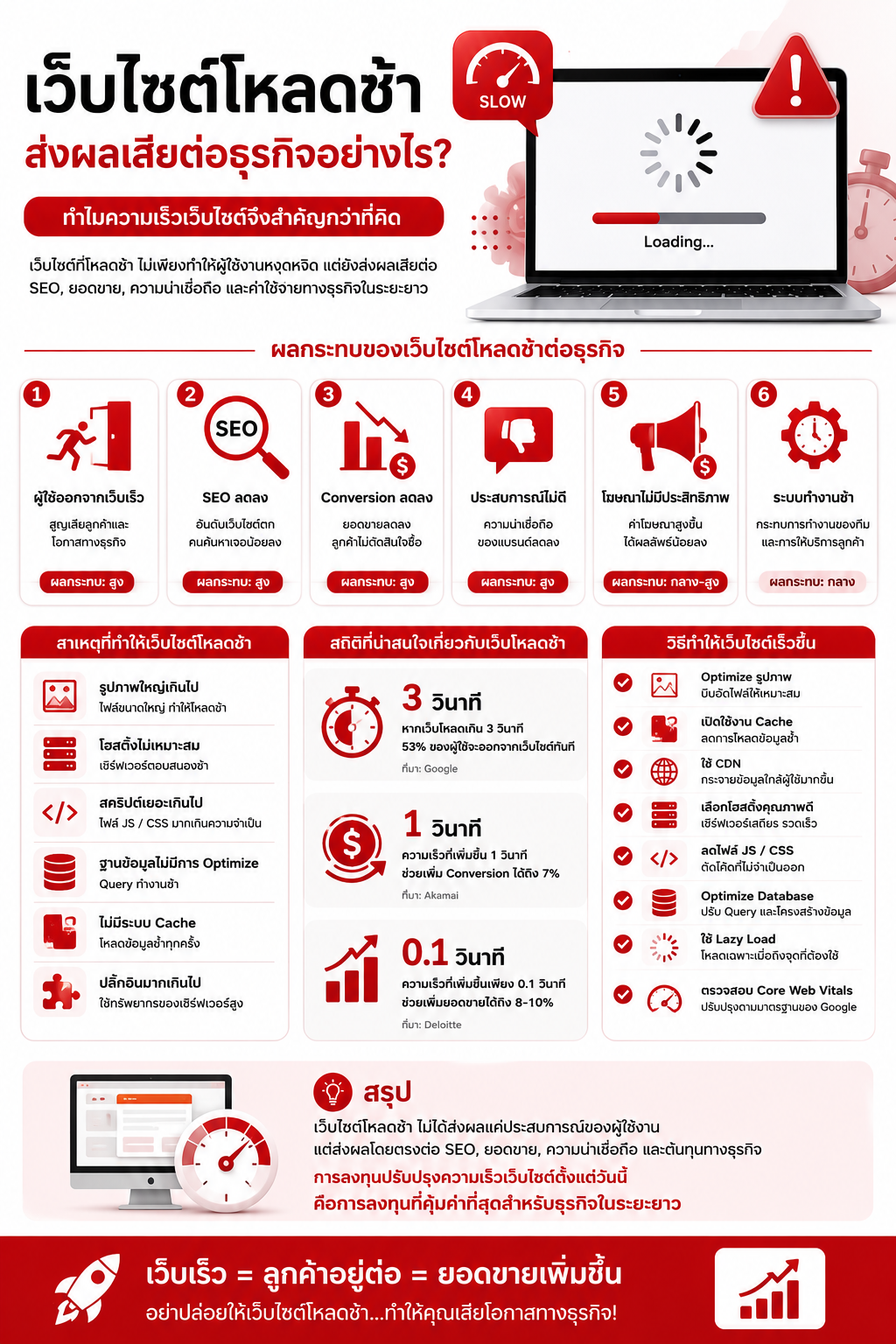
How Does a Slow Website Hurt Your Business? Why Website Speed Matters
Does a Slow Website Really Affect Business?
Website speed directly affects user experience, SEO performance, and conversions. A slow website does not just frustrate visitors—it can reduce sales opportunities and damage business credibility.
Business Impact of Slow Websites
| Problem | Business Impact | Severity |
|---|---|---|
| High Bounce Rate | Lost customers | High |
| Poor SEO | Less visibility | High |
| Lower Conversions | Fewer sales | High |
| Poor User Experience | Lower trust | High |
| Inefficient Advertising | Higher costs | Medium-High |
Major Problems Caused by Slow Websites
Higher Bounce Rates
Visitors leave websites that take too long to load.
Poor SEO Performance
Slow websites often rank lower in search engines.
Lower Conversions
Users abandon forms, purchases, and inquiries.
Reduced Brand Credibility
Customers may perceive slow websites as outdated or unreliable.
Higher Advertising Costs
Slow landing pages often reduce ad efficiency.
Common Causes of Slow Websites
| Cause | Description |
|---|---|
| Large Images | Heavy file sizes |
| Poor Hosting | Slow response times |
| Too Many Scripts | Slower rendering |
| Database Issues | Slow queries |
| No Caching | Repeated loading |
How to Improve Website Speed
Optimize images
Use caching
Implement CDN
Upgrade hosting
Reduce unnecessary scripts
Optimize databases
Conclusion
Website speed is not only a technical issue—it directly impacts business growth, customer trust, and revenue. Investing in performance optimization early often saves costs later.